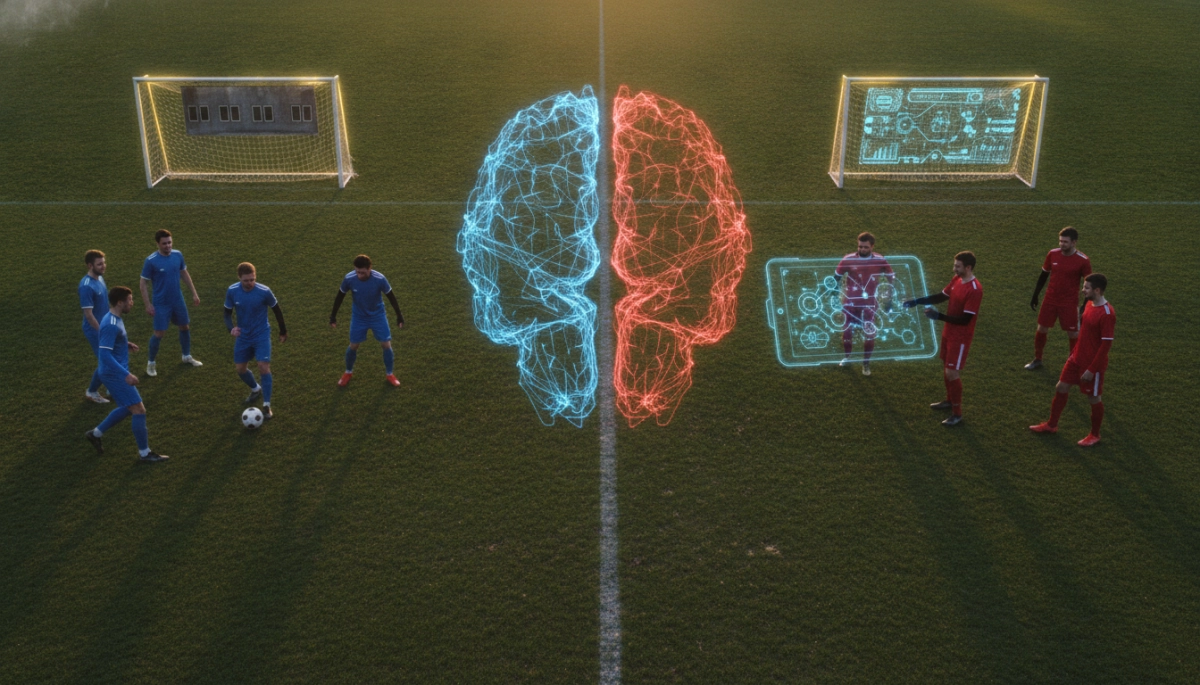
The Damage Is Done Before the Whistle Blows
Most bettors assume their mistakes happen in the moment — a bad call on a late corner, a goalkeeper error, a red card that flipped the game. But the truth is less dramatic: the majority of football betting mistakes are locked in well before kick-off. They happen at the desk, not on the pitch.
Pre-match decision-making covers three distinct phases — research, selection, and staking — and errors in any one of them can quietly erode a betting record over time. The problem is that these mistakes rarely feel like mistakes when they’re made. That’s precisely what makes them dangerous.
Mistaking Familiarity for Research
One of the most pervasive pre-match errors is confusing general football knowledge with genuine analysis. A bettor who watches the Premier League every weekend develops a strong sense of team identities and narrative momentum — but that knowledge is often surface-level, emotionally coloured, and already priced into the market.
Bookmakers employ full-time analysts. Their odds already reflect the widely available information most casual bettors draw from: recent form, home advantage, league position. If a bettor’s research mirrors what the market already knows, there is no edge — only the illusion of one.
Real pre-match research means going a layer deeper: examining underlying performance metrics rather than just results, checking how a side performs after European fixtures, or identifying whether a manager rotates heavily in certain competitions. During the 2022–23 Champions League group stage, several Premier League clubs fielded significantly weakened XIs on dead-rubber matchdays — a pattern identifiable in advance by anyone studying squad management tendencies rather than league form tables.
Effort and accuracy are not the same thing. Spending two hours reading match previews largely produces the consensus view already reflected in the odds. Focused research on a narrower question — squad fitness, set-piece trends, referee tendencies — is far more likely to surface something the market hasn’t fully accounted for.
Selection Bias and the Urge to Bet Too Much
The second phase where bettors go wrong is selection — specifically, selecting too many matches for the wrong reasons. A midweek card with fourteen fixtures creates the feeling that opportunities are everywhere. For most bettors, that feeling is a trap.
When selection is driven by availability rather than genuine conviction, standards drop. Bets get placed on matches where research is thin, the edge is uncertain, and the primary motivation is simply wanting action. Over a long sample, those low-conviction selections drag down overall performance in ways that are easy to rationalise but difficult to reverse.
Selective patience — the discipline to pass on a match when the case isn’t strong enough — is one of the most undervalued skills in football betting. Skipping a weak selection isn’t inaction; it’s protecting the bankroll for situations where analysis genuinely supports a bet.
This connects to another common error: confirmation bias. Once a bettor has a loose leaning toward an outcome, subsequent research tends to reinforce rather than challenge it. Evidence supporting the intended bet gets weighted heavily; evidence that complicates it gets minimised. The result is a selection that feels well-reasoned but is actually the product of a conclusion reached too early.

Staking Errors: Where Sound Thinking Meets Poor Execution
Even bettors who invest genuinely in research and exercise real discipline during selection frequently undermine themselves at the staking stage. The amount placed on a bet carries as much consequence as the selection itself, and it is governed by a different set of cognitive traps.
The most common staking mistake is allowing perceived confidence to drive stake size without any systematic basis. A bettor who feels strongly about a result naturally wants to back that conviction with more money. But confidence is a subjective sensation, not a reliable measure of edge. Strong feelings about a match often correlate more closely with emotional investment in the narrative than with genuine probabilistic advantage.
Flat staking — placing the same amount on every qualifying bet regardless of perceived confidence — protects against this tendency. It removes the temptation to chase stronger feelings with larger sums and creates a consistent baseline for honest evaluation. Many bettors resist it because it feels mechanical. In practice, unless a bettor has a rigorously tested method for calibrating confidence levels, flat staking consistently outperforms the intuitive approach over meaningful sample sizes.
The Accumulator Problem
Accumulators occupy a complicated space in football betting. The appeal is obvious: a small outlay can return a large multiple. But each leg added compounds the bookmaker’s margin. A four-fold with a reasonable edge on each individual selection can still carry a deeply negative expected value once those margins multiply across the slip.
There is a particular version of this mistake that occurs in pre-match research: constructing an accumulator first, then working backwards to justify each selection. The target payout comes first; analysis becomes a rationalisation for a structure already decided on aesthetic grounds. Selections that wouldn’t clear a reasonable individual threshold get included because they’re needed to hit a certain price. That inversion — bet design before genuine analysis — is one of the clearest signs that staking logic has overridden research logic entirely.
The Hidden Cost of Poor Timing
One pre-match variable that receives far less attention than it deserves is when a bet is placed. Line movement between market opening and kick-off is not random noise — it carries information. A bettor who places a wager on Wednesday for a Saturday fixture and then ignores subsequent price movement may be acting on odds that no longer reflect current conditions.
This creates two distinct timing errors that pull in opposite directions:
- Betting too early — before team news, injury updates, or confirmed line-ups — means accepting uncertainty the market will subsequently resolve, often at the bettor’s expense.
- Betting too late — waiting until confirmed line-ups have been absorbed and prices have already moved — frequently means missing the value entirely.
Timing should be a deliberate choice tied to a specific reason. Some bets are better placed early, when a bettor has identified a structural angle that won’t immediately shift the market. Others are better placed close to kick-off, when the informational picture is more complete. Betting at a fixed habitual time regardless of circumstances is its own form of lazy decision-making, and it costs money in ways that rarely appear obviously on the ledger.
Fixing the Process, Not Just the Results
The frustrating thing about pre-match betting mistakes is that they don’t announce themselves clearly. A poorly timed bet doesn’t feel poorly timed when it’s placed. An accumulator built around a target price feels like shrewd shopping. A high-confidence oversized stake feels like conviction. The errors are dressed up in the same clothing as good decisions, which is why addressing them requires structural change rather than simply trying harder.
The most effective shift a bettor can make is to treat the three phases — research, selection, and staking — as separate processes with separate standards. Research should conclude before selection begins. Selection should be confirmed before stake size is considered. Compressing those phases together, moving fluidly from a hunch to a bet amount in a single sitting, is exactly the environment in which cognitive shortcuts quietly take over.
Keeping a detailed betting log accelerates self-correction considerably. Not just recording outcomes, but documenting the reasoning behind each selection, the confidence level assigned at the time, and the stake rationale. When reviewed honestly over a meaningful sample, patterns emerge that gut-feel analysis consistently misses. Which match types produce genuine edge? Which perceived research strengths are actually just consensus dressed up as insight? The answers are often uncomfortable, and almost always useful.
Bettors who make sustained progress tend to share one quality: they treat their own process with the same critical distance they apply to the matches they’re analysing. They question not just whether a team will win, but whether their reasoning is genuinely sound or merely convincing. That distinction — between a well-argued position and a correct one — is where the real work of pre-match betting takes place.
For those looking to build a more structured analytical foundation, resources like Pinnacle’s football betting strategy guides offer detailed frameworks that go well beyond surface-level advice — a useful reference point for bettors serious about understanding where genuine edge can realistically be found.
The pitch hasn’t been touched yet. The players haven’t warmed up. That window — between the first piece of research and the moment a stake is confirmed — is where a betting record is genuinely made or quietly lost. Treating it with the seriousness it deserves is the clearest separation between bettors who improve over time and those who remain permanently puzzled by why the results never quite match the effort.