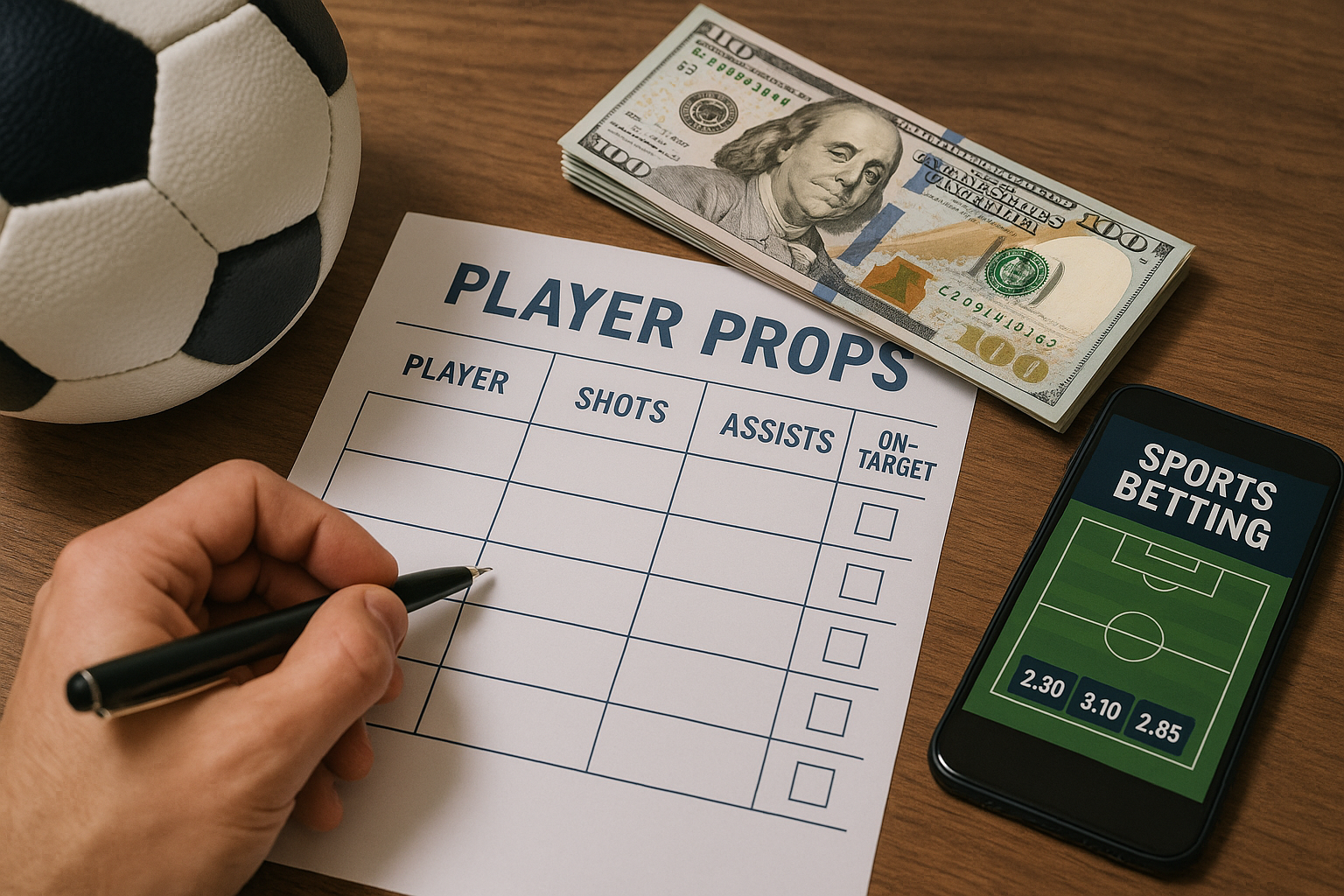
What Player Props Are and Why They Matter for Bettors
Player props have grown into one of the most popular betting categories in modern football wagering. Unlike traditional markets such as 1X2, totals or handicaps, player props focus on the performance of individuals rather than teams. This shift allows bettors to take advantage of tactical roles, statistical trends and matchup specifics that may not influence the final score but significantly affect individual output. For analytical bettors, player props provide an edge because they rely on measurable actions like shots, assists, tackles or passes rather than unpredictable match results.
Among all props, shots, shots on target and assist markets are especially valuable because they are tied directly to attacking involvement. They are less dependent on luck compared to goalscoring markets, and they often reflect patterns that repeat consistently across matches. For example, a winger who averages several shots per game continues taking shots even when his team is an underdog, while a creative midfielder will attempt key passes regardless of the match tempo.
Player props matter because they allow bettors to exploit inefficiencies in odds. Bookmakers must price hundreds of players for every match, and prop lines can be influenced heavily by public perception, recent highlight moments or incomplete interpretation of statistics. Bettors who understand how these markets operate can find long term value by focusing on roles, expected output and matchup context.
Understanding Shots, Shots on Target and Shot-Related Props
Shot based props are among the most straightforward yet nuanced betting markets available. They rely on quantifiable metrics but behave differently depending on tactics, opponent structure and game environment. Bettors who understand how shot volume is generated can predict these markets more effectively than relying on intuition.
Total shots include every attempt toward goal, whether blocked, off target or saved. Shots on target, however, only include attempts that require a goalkeeper save or result in a goal. This distinction is crucial, because many players shoot frequently but inaccurately, while others take fewer but higher quality attempts. Bookmakers typically offer markets such as over under shots, over under shots on target and player milestones like two or more shots on target.
Teams with high possession, fast transitions or dominant forward lines tend to generate more shot opportunities. Conversely, defensive opponents, low blocks or away matches can reduce shot volume. Understanding these dynamics helps bettors anticipate whether a player’s statistical output is likely to increase or decrease in a given matchup.
Shots Total Props
Shots total props focus on the raw volume of attempts. These are highly influenced by a player’s tactical role. Strikers and wingers typically produce more attempts because they occupy forward zones and receive passes in shooting positions. Midfielders may record fewer shots unless they play an advanced creative or box to box role.
When analyzing shot totals, bettors should consider pace of play and expected possession. A match predicted to be open and end to end will usually generate more opportunities for attackers. Meanwhile, matches against low block defenses may reduce shot volume but increase long range attempts. A player’s historical averages offer a baseline, but matchup context determines whether they will exceed or fall below expectations.
Shots on Target Props
Shots on target represent accuracy rather than pure volume. Some players produce many shots but few on target, while others take selective but efficient attempts. These props depend on shooting technique, distance, defensive pressure and goalkeeper quality.
Because on target attempts must meet a stricter definition, these props are more volatile than total shots but often provide clearer value when bettors identify players with consistent accuracy. For example, forwards who frequently take touches inside the box typically have higher on target percentages. Set piece takers may also produce dependable on target attempts due to free kicks from dangerous positions.
Understanding goalkeeper tendencies also matters. A strong shot stopping keeper can reduce on target results because players hesitate or attempt harder angles.
Assist Props and Creating Chances
Assist props focus on a player’s ability to create scoring opportunities. They rely on passing quality, team tactics and positioning on the field. Unlike shots, which depend mostly on the attacker’s action, assists require successful cooperation. A player may create several chances but still not record an assist if the finisher fails to convert. For this reason, expected assist metrics, or xA, provide deeper insight.
xA measures the probability that a pass should become an assist based on historical shot quality. Players who consistently generate high xA numbers often outperform their assist totals over time. These include set piece takers, advanced playmakers, wingers who cross frequently and fullbacks in high possession teams. Bettors who analyze xA can identify undervalued assist candidates before bookmakers adjust the lines.
Team style also influences assist potential. Clubs using overlapping fullbacks, inverted wingers or midfield triangles often distribute chance creation differently. Bettors must consider where creativity originates and which players frequently deliver the final pass.
How to Predict Likely Assist Providers
Key indicators for strong assist candidates include:
- A high number of key passes per game.
- Regular involvement in set pieces such as corners or free kicks.
- A role that places the player in advanced positions frequently.
- Strong chemistry with primary forwards.
- A team style that emphasizes crossing or through balls.
Tracking these elements helps bettors anticipate players likely to record assists even before trends become obvious in raw statistics.
Best Markets for Assist Betting
Common assist markets include:
- Anytime assist, where the player must register at least one.
- Over under season or match assists for specific players.
- Combined markets such as goals plus assists.
These markets are especially profitable when bettors identify undervalued playmakers whose contributions may not be reflected in public expectations.
How to Analyze Player Roles and Match Context for Prop Bets
Choosing the right player props begins with understanding how a player fits into the team’s tactical system. Prop markets are not purely based on talent; they are shaped by positioning, responsibilities, possession distribution and the opponent’s defensive structure. Two identical players can produce very different prop outcomes depending on how they are used by the manager.
The first step is recognizing the player’s role. Forwards, especially central strikers, usually generate the highest shot volume, but this depends on whether they are true finishers or link up forwards. Wingers in high possession teams get many crossing and cutback chances, which increases both shots and assist potential. Creative midfielders produce key passes but may not shoot frequently. Fullbacks in attacking systems generate crosses and chances but may struggle against teams that dominate possession.
The second step is understanding match context. A team expected to dominate possession will naturally produce more attacking actions, increasing opportunities for shots and assists. Conversely, a team predicted to defend deep will offer fewer chances. Bettors should also consider whether the opponent’s defensive shape allows space in central areas or wide channels. Some teams concede more shots from specific zones or allow crosses more frequently.
Injuries, suspensions and rotation also impact props. If a team’s main striker is absent, wingers may take more shots or central midfielders may push forward more often. Lineup changes can significantly alter expected output and create opportunities before bookmakers adjust prop lines.
Pace, Pressing and Expected Numbers
High pace matches usually produce strong prop opportunities. When both teams press aggressively or counterattack quickly, the number of shots and key passes increases. Bettors should look for matches where both sides prefer fast transitions, as this environment boosts many props including shots, shots on target and assists.
Pressing styles affect shot distribution. A team with a high press forces turnovers in dangerous zones, increasing shooting chances for forwards and midfielders. Meanwhile, teams that sit in a low block reduce shot opportunities but may still allow high quality chances when possession is lost.
Expected goals (xG) and expected assists (xA) are essential tools for prop bettors. These metrics reflect chance quality rather than raw volume and indicate whether players consistently get into valuable positions. Players with high xG but low goal conversion may still produce strong shot props. Players with high xA but few assists may soon regress positively.
Using Stats Sites to Support Prop Betting
Reliable statistical sources help bettors validate their predictions. Platforms like WhoScored, FotMob and FBref offer detailed data on shots, key passes, expected metrics and player heat maps. These insights reveal patterns that bookmakers sometimes undervalue.
Shot maps show where a player attempts shots most frequently, helping bettors understand whether an opponent’s defensive shape allows those zones. Passing maps and chance creation charts help identify likely assist providers.
Using data driven research instead of relying on recent headlines or sentiment gives bettors a consistent advantage in prop markets.
Advanced Player Props: Combined Bets and Risk Management
As prop betting becomes more popular, bookmakers have introduced combined prop markets such as shots plus shots on target, goals plus assists, or multi prop same game parlays. These combinations offer higher payouts but also carry higher variance because more conditions must be met.
Bettors should only use combined props when the correlation between events is strong. For example, a forward with a high shot volume naturally has a better chance of hitting shots on target. However, combining unrelated categories increases unpredictability.
Risk management becomes crucial when dealing with props. Because props rely on individual performances, small changes like substitutions, tactical shifts or early injuries can derail bets quickly. Bettors should size stakes carefully and avoid putting large portions of their bankroll into volatile outcomes.
Tracking long term results in prop markets is essential. Bettors who record all wagers can identify which markets produce consistent returns and which rely too much on luck.
Common Mistakes Bettors Make in Player Prop Markets
Many bettors misunderstand player roles and assume that talent alone determines prop success. A world class forward playing for a defensive team may produce fewer shots than a mid level forward in an attacking system. Failing to consider tactical context is one of the biggest mistakes in prop betting.
Another mistake is chasing standout performances. When a player scores or assists multiple times in one match, public sentiment pushes their prop lines higher in the next match. Bettors who follow these inflated lines often lose value, especially if the player’s underlying numbers do not support continued output.
Ignoring matchups is another common error. Some defenders suppress shot volume by marking tightly, while others allow more space. Prop bettors must analyze how players match up positionally, not just how they perform on average.
Finally, many bettors rely too heavily on recent form without considering regression. Props are volatile, and short term results often fluctuate away from expected numbers. Bettors must look at long term data rather than highlight moments.
Conclusion: Using Player Props to Gain an Analytical Edge
Player props such as shots, shots on target and assists offer bettors a unique pathway to value that does not rely on predicting match winners or totals. These markets reward preparation, tactical understanding and a detailed approach to analytics. By examining player roles, expected involvement, match context and statistical trends, bettors can consistently identify lines where bookmakers have left margin on the table.
Shot based props are ideal for bettors who understand attacking patterns and team dynamics. Assist markets benefit those who study chance creation, key passes and team structure. On target props reward bettors who can differentiate between volume shooters and efficient finishers. When combined with expected numbers and reliable data sources, prop betting becomes a strategic discipline rather than guesswork.
The key is to avoid emotional decisions and remain disciplined. Props carry variance, and even the best research cannot eliminate unpredictability. However, bettors who embrace long term thinking, responsible bankroll management and consistent analytical methods are far more likely to achieve sustainable success.
Player props open the door to deeper engagement with football, allowing bettors to appreciate the tactical and statistical nuances that shape each match. With the right framework and understanding, props can become one of the most enjoyable and potentially profitable areas of football betting.
Player Props Betting FAQ
1. Are player props easier to predict than match outcomes?
Not always. They rely on individual performance, which can be unpredictable. However, props often offer more consistent patterns than match results when bettors use data driven analysis.
2. What affects a player’s shot and assist numbers the most?
Tactical roles, expected possession, pace of play, opponent structure, and whether the player is on set pieces.
3. Are shots on target props more valuable than total shots props?
They can be, because they reflect accuracy rather than pure volume, but they also carry higher variance.
4. How important is lineup news for prop betting?
Very important. A positional shift or a key injury can significantly affect shot volume, chance creation and passing involvement.
5. Do public overreactions influence prop markets?
Yes. After a standout performance, bookmakers often inflate lines because bettors expect repeat results. This can create opportunities for value on the under.
6. Should bankroll stakes be smaller for props?
Yes. Props involve high variance, so smaller, consistent stakes protect bettors from swings and help maintain discipline.