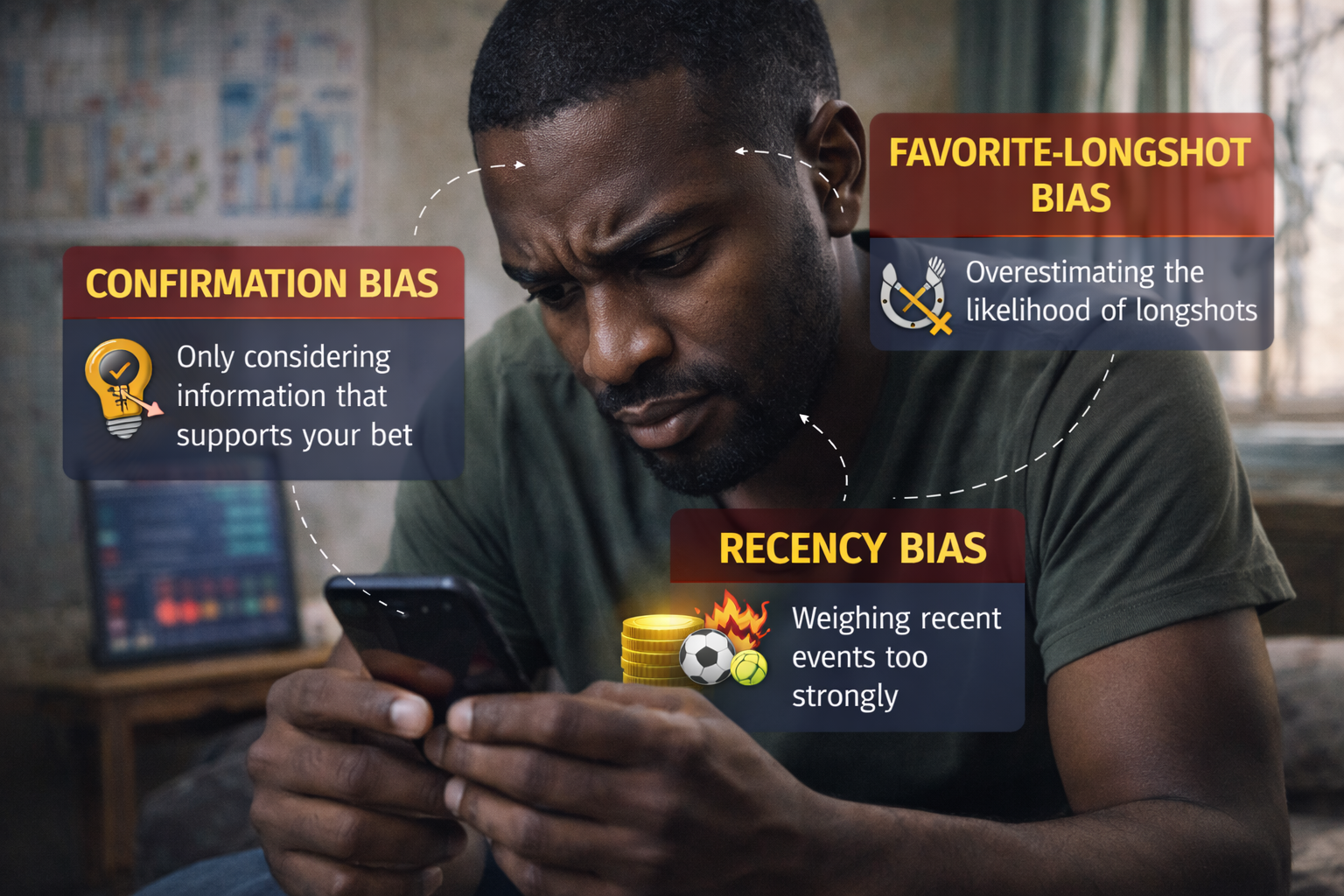
Psychological biases in sports betting and why they matter
Sports betting is often seen as a game of statistics, information and analysis. However, one of the most important factors influencing betting results is psychology.
Psychological biases in sports betting can lead bettors to make poor decisions even when their analysis is reasonable. When emotions begin to influence judgment, rational thinking can easily weaken.
Some of the most common betting biases include:
- gambler’s fallacy
- recency bias
- loss chasing
These mental traps can push bettors to make decisions that are not based on real probabilities.
Understanding these biases is the first step toward controlling them.
Why emotions influence betting decisions
Betting involves money, uncertainty and expectations. Because of this, emotional reactions can be strong.
When a bettor loses several bets in a row, they may feel:
- frustration
- pressure to recover losses quickly
- doubt about their strategy
On the other hand, a series of wins can create overconfidence.
Both situations can lead to poor decision making.
Ideally, betting should be a process driven by analysis rather than emotions.
Gambler’s fallacy, believing a result is “due”
Gambler’s fallacy is one of the most well known psychological errors in gambling.
It occurs when a bettor believes that a streak of results must change simply because it has lasted for some time.
Example:
If a team loses five matches in a row, a bettor may think:
“They are due for a win now.”
However, previous results alone do not change the probability of the next match.
Each game depends on factors such as:
- team strength
- injuries
- tactics
- opponents
Believing that results must “balance out” can lead to poor betting decisions.
Recency bias, overvaluing recent results
Recency bias occurs when bettors give too much importance to the most recent results.
For example, a team that has won several matches recently may appear stronger than it actually is.
Similarly, a team that has lost several matches may be underestimated.
This bias can lead to:
- overrating short term form
- ignoring long term statistics
- misinterpreting short streaks
In sports, short term results often do not reflect a team’s true strength.
Loss chasing, trying to recover losses quickly
Loss chasing happens when bettors try to recover lost money quickly.
This is one of the most dangerous psychological biases in betting.
A typical scenario looks like this:
- a bettor loses several bets
- they increase their stake to recover losses
- decisions become impulsive
This behavior often leads to even larger losses.
How to recognize these biases in your own behavior
Recognizing psychological biases requires honesty about your own betting habits.
Warning signs include:
- increasing stakes after losses
- placing bets without proper analysis
- making decisions based on frustration
If these patterns appear, it is a sign that emotions are influencing decisions.
Rules to control psychological mistakes
Setting clear betting rules can help reduce the impact of these biases.
Examples of useful rules include:
- fixed stake per bet
- daily or weekly loss limits
- taking breaks after losing streaks
These rules help ensure that betting decisions remain rational.
Emotional vs disciplined betting behavior
| Situation | Emotional bettor | Disciplined bettor |
|---|---|---|
| After losses | increases stake | keeps stake consistent |
| After wins | becomes overconfident | remains consistent |
| Analysis | rushed or emotional | structured and logical |
| Long term outcome | unstable results | more controlled results |
This comparison shows how mindset can influence betting outcomes.
Conclusion: discipline as the foundation of long term betting
Psychological biases are a natural part of human thinking.
However, in sports betting they can have serious consequences if they are not recognized.
Understanding concepts like gambler’s fallacy, recency bias and loss chasing helps bettors make more rational decisions.
Ultimately, discipline and self control are the most important tools for maintaining a long term betting strategy.
FAQ
What is gambler’s fallacy in betting?
It is the belief that a certain outcome must happen soon simply because the opposite result has occurred many times.
What does recency bias mean in sports betting?
It means giving too much importance to recent results instead of considering long term data.
What is loss chasing?
Loss chasing occurs when bettors try to recover losses quickly by increasing their stakes.
How can bettors control these psychological biases?
By setting clear betting rules, managing bankroll properly and avoiding emotional decisions.
Are psychological biases common in betting?
Yes. Most bettors experience them at some point, especially during winning or losing streaks.